When Language Breaks: American Writers Who Invented New Tongues for Unbearable Truths
There is a particular kind of silence that arrives after catastrophe. It is not the silence of peace, nor of contemplation. It is the silence of a language that has reached its limit and simply stopped—mouth open, thought incomplete, the sentence trailing into white space. American writers have always known this silence. What distinguishes the current generation is their refusal to paper over it with fluency.
Instead, they have chosen to work inside the fracture.
The Failure of Inherited Syntax
For centuries, the dominant tradition in American letters operated on an implicit contract: the writer would translate experience into legible prose, and the reader would receive it whole. Trauma, grief, alienation, ecstasy—all of it could, in theory, be rendered through the right combination of words in the right order. This contract was never as stable as it appeared. But it held well enough, for long enough, that its collapse feels genuinely seismic.
Contemporary writers such as Claudia Rankine, Jenny Zhang, and Tommy Orange have made that collapse the very subject of their work. In Citizen: An American Lyric, Rankine deploys the second-person pronoun with such surgical deliberateness that the reader cannot locate a safe distance from which to observe. The syntax itself becomes a mechanism of implication. You are not watching racism happen to someone else. The grammar will not permit that comfort.
Orange's There There opens with a prologue that reads more like a theoretical manifesto than a novel's threshold—a controlled detonation designed to destabilize whatever assumptions the reader carried into the book. By the time the narrative proper begins, the ground has already shifted. The reader is, in the most precise sense, disoriented. This is not a failure of craft. It is craft at its most deliberate.
Neologism as Necessity
When existing vocabulary cannot carry the weight of an experience, some writers have simply invented new words. This is not affectation. It is a diagnostic response to a genuine insufficiency.
The tradition has precedents—Toni Morrison's reclamation and reinvention of language throughout her career established that American English could be remade rather than merely used. But the current moment has produced a particularly urgent strain of linguistic invention, driven in part by the novel categories of suffering that digital life has generated.
How does one name the specific grief of watching a parent decline through a screen during a pandemic? The particular dissociation of performing intimacy on a platform engineered for engagement metrics? Standard vocabulary offers approximations—loneliness, alienation, numbness—but these are blunt instruments applied to wounds that require far more precision.
Writers like Carmen Maria Machado in In the Dream House respond by importing vocabulary from unexpected registers: academic theory, video game terminology, fairy tale convention. The effect is not whimsy. It is the creation of a new composite language capable of describing an experience that no single existing register could accommodate alone. The hybrid tongue becomes the only honest tongue.
Fragmentation as Architecture, Not Accident
Perhaps the most visible—and most frequently misread—technique in this literary tradition is fragmentation. Critics who encounter broken texts sometimes interpret the breakage as evidence of insufficient control. The opposite is almost always true.
When Maggie Nelson constructs The Argonauts as a series of numbered propositions rather than conventional chapters, she is not failing to write a memoir. She is acknowledging that the experience she is documenting—transformation, desire, the instability of selfhood—cannot be contained by linear narration without falsifying it. The gaps between her numbered sections are not empty. They are load-bearing.
Similarly, when Renee Gladman builds her Ravicka novels around a city that may or may not exist, populated by sentences that deliberately resist closure, she is not being obscure for its own sake. She is insisting that the reader participate in the construction of meaning rather than simply receive it. The incompleteness is an ethical position.
This mode of fragmentation has particular resonance in an American context saturated by digital communication. We have all learned to read in pieces—tweets, threads, notifications, comment sections. Our attention has been restructured by platforms that reward brevity and punish sustained argument. The fragmented literary text does not simply mirror this condition. At its best, it uses that familiarity as a trap, luring the reader into a mode of consumption that the text then systematically refuses to satisfy.
The Ethics of Linguistic Rupture
There is an argument—occasionally made in good faith, more often in defensiveness—that difficult language excludes readers rather than expanding the literary conversation. It is worth taking this objection seriously before setting it aside.
Linguistic difficulty can certainly become a form of gatekeeping. When experimental technique is deployed without genuine necessity, it functions as a kind of aesthetic credentialing—a signal of sophistication that excludes more than it illuminates. The writers discussed here are largely not guilty of this. Their formal choices are inseparable from their subjects. The difficulty is the point, because the experience being described is itself difficult, and any language that made it easy would be lying.
To render grief as smooth, readable prose is to suggest that grief is navigable in the way that prose is navigable. It is not. To render the experience of racial violence in sentences that proceed logically from premise to conclusion is to imply a rationality that the experience does not possess. Broken language, in these contexts, is not an obstacle to truth. It is the only available vehicle for it.
The Dark House and the Words That Live There
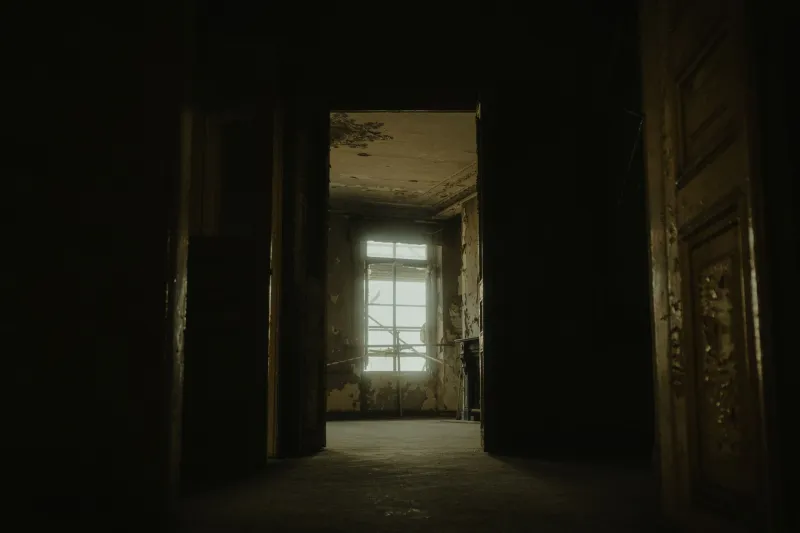
The house of American literature has always contained rooms that polite language refused to enter. What the current generation of writers has done is force open those doors—not with the confidence of conquerors, but with the desperation of people who have nowhere else to go.
They arrive with fractured syntax, borrowed vocabularies, invented words, and sentences that collapse before they finish. They arrive with texts that look, on the page, like something survived rather than something composed. And in that survivorship, in that refusal to make the unbearable beautiful or the unspeakable tidy, they have produced some of the most genuinely necessary literature this country has generated in decades.
The language is broken because the experience was breaking. That is not a failure of craft. That is craft at its most honest, most rigorous, and most human.