Raised from the Grave: The Obsolete American Literary Forms Making Their Strange Return
Mainstream publishing has a complicated relationship with literary history. It will celebrate the past as heritage while quietly ensuring that the past's most disruptive formal experiments remain safely buried. The epistolary novel, the found-text collage, the procedural narrative, the chapbook sequence—these forms were not abandoned because they stopped working. They were abandoned because they stopped being profitable, which is an entirely different thing.
Experimental American writers have always known where the bodies are buried. Increasingly, they are digging them up.
The Epistolary Novel: Letters from the Underworld
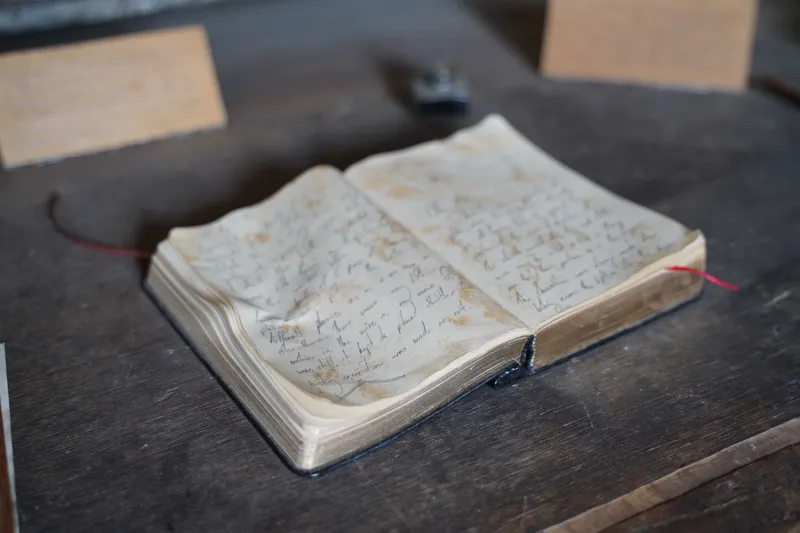
The epistolary novel—fiction composed entirely of letters, diary entries, documents, and correspondence—reached its commercial peak in the eighteenth century and its critical rehabilitation in the twentieth. By the time email arrived and then text messaging, the form seemed irrevocably quaint. Who writes letters anymore? The question was meant to be rhetorical.
But the question contained its own answer. The shift from handwritten correspondence to digital communication did not eliminate the letter as a literary form. It multiplied its possibilities. Contemporary writers have recognized that the epistolary mode is uniquely suited to capturing a culture that communicates in fragments, performs intimacy at scale, and maintains relationships primarily through screens.
Carmen Maria Machado's In the Dream House uses the second-person address—a cousin of the epistolary mode—to create a text that functions as a letter to the self across time, documenting abuse in a framework that implicates both writer and reader. The intimacy of direct address, borrowed from the letter form, creates an unbearable closeness.
Hernan Diaz's Trust reconstructs a single American life through four overlapping documents—a novel, a memoir, a manuscript, and a diary—each one revising and undermining the last. The form reveals not just a story but the machinery by which stories are constructed, controlled, and weaponized. The epistolary tradition's inherent multiplicity of voices becomes, in Diaz's hands, an engine of epistemological terror.
Jesmyn Ward's Sing, Unburied, Sing does not employ epistolary form directly, but its use of multiple first-person narrators—including a ghost—imports the form's essential logic: competing voices, competing truths, the letter as testimony that can never be fully trusted or fully dismissed.
Found-Text Collage: The Archive as Weapon
The found-text collage has its American roots in the avant-garde movements of the early twentieth century and its critical apogee in the Language poets of the 1970s and 80s. It is a form that takes the detritus of culture—newspaper clippings, legal documents, advertising copy, official records—and reassembles it into something that exposes what the original sources were designed to conceal.
This form is experiencing a genuine resurgence, and the reasons are not difficult to identify. We live in an era of archival abundance and institutional dishonesty. Government documents, corporate communications, social media records, and surveillance data are simultaneously more accessible and more deliberately obscured than at any previous moment in American history. The found-text collage is the literary form built precisely for this condition.
M. NourbeSe Philip's Zong! remains the form's most devastating recent achievement: a text constructed entirely from the legal decision in the Gregson v. Gilbert case, which adjudicated an insurance claim arising from the massacre of enslaved people. Philip dismantles the legal language word by word, forcing the reader to encounter the violence concealed within its bureaucratic calm. The archive becomes a crime scene. The collage becomes an indictment.
Jenny Offill's Dept. of Speculation and Weather import the collage sensibility into domestic fiction, assembling their narratives from fragments—observations, quotations, half-finished thoughts—in a manner that captures the texture of contemporary consciousness more accurately than any linear narration could.
The Procedural Narrative: Rules as Revelation
The procedural narrative—fiction governed by explicit rules, constraints, or instructions—has its most celebrated precedents in the Oulipo movement, the French collective whose members included Georges Perec and Italo Calvino. American literature has historically been suspicious of such overt formalism, preferring to hide its constraints behind the illusion of organic storytelling.
That suspicion is eroding. A generation of American writers has discovered what the Oulipo understood decades ago: that constraint does not limit creative expression. It generates it. The rule becomes a pressure that forces language into shapes it would never assume under ordinary conditions.
Layli Long Soldier's WHEREAS constructs its engagement with federal Indian policy through a series of formally rigorous sections, each one governed by different rules of composition. The procedural structure mirrors—and devastatingly critiques—the procedural language of government documents and treaty texts. Form becomes argument.
Nick Flynn's memoir work consistently employs procedural elements—numbered fragments, repeated structural motifs, formal constraints that the reader gradually deciphers—to construct narratives that feel both rigorously controlled and emotionally uncontainable.
Hybrid Genre: The Form That Cannot Be Filed
Perhaps the most broadly influential of the resurrected forms is the hybrid work that refuses categorical assignment—part essay, part poem, part fiction, part document. This is not a new invention. American literary history contains numerous such unclassifiable texts. But mainstream publishing's insistence on genre clarity drove them to the margins.
Independent presses—Graywolf, Nightboat, Coffee House, Wave Books—have become the primary custodians of hybrid work, publishing texts that larger houses cannot shelve without anxiety. This is, in its way, a form of cultural preservation: the small press as literary archaeologist, maintaining the conditions under which formally adventurous work can survive.
The commercial irrelevance of these forms is precisely what preserves their integrity. A literary mode that cannot be easily marketed cannot be easily co-opted. The epistolary novel, the found-text collage, the procedural narrative, the hybrid text—these forms exist at the margins of the publishing economy, which means they exist at a safe distance from its distorting pressures.
Why the Dead Come Back
Forms are abandoned when the cultural conditions that produced them change. They are resurrected when those conditions—or their descendants—return. The epistolary mode resurfaces in an age of digital correspondence. The found-text collage resurfaces in an age of archival abundance and institutional deception. The procedural narrative resurfaces in an age governed by algorithms and automated systems.
The writers excavating these forms are not nostalgists. They are opportunists in the best sense—people who recognize that the right tool for the present moment was, in fact, invented a long time ago, and that its abandonment was never really about its failure.
The grave was always temporary. The form was always waiting.