The Uneasy House: How American Fiction Builds Dread Into Its Very Bones
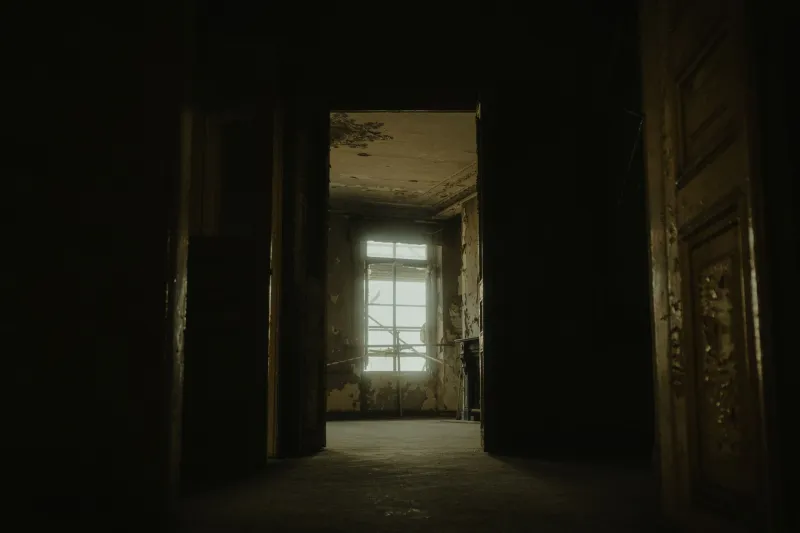
Consider the architecture of a house designed to disorient. The hallway that appears shorter from one end than the other. The staircase whose landing is never quite where memory placed it. The room that, when you finally open the door, is not the room you expected. This is the architecture of dread—not horror as a feature of what the space contains, but horror as a property of the space itself.
The most rigorous American fiction of the past two decades has been building exactly this kind of house. And it is doing so not through subject matter, not through plot, but through form.
Structure as Psychological Weapon
The conventional novel operates on an implicit promise of orientation. Even when narrative timelines shift, even when perspectives multiply, the reader retains a sense—however provisional—of where they stand in relation to events. This orientation is not a neutral feature of the reading experience. It is a form of reassurance, a guarantee that the text will eventually resolve its tensions into something navigable.
The writers I am concerned with here have revoked that guarantee.
Mark Z. Danielewski's House of Leaves remains the most architecturally radical example in recent American fiction: a text that is literally designed to be spatially impossible, whose footnotes contain footnotes, whose appendices generate their own appendices, whose typography rotates and inverts and collapses as the narrative space it describes does the same. The reader's disorientation is not a byproduct of the novel's subject. It is the subject. The form does not represent the horror. The form is the horror.
But Danielewski's experiment, for all its ambition, risks being dismissed as an extreme case—a maximalist provocation rather than a template. What is more interesting, and more broadly influential, is the way his formal logic has been absorbed into American fiction's mainstream experimental tradition.
The Unreliable Architecture of Time
Fragmented timelines have become so commonplace in contemporary American fiction that they risk losing their edge. When deployed carelessly, the non-linear narrative is simply a structural quirk—a way of generating mild suspense through withheld information. When deployed with genuine rigor, it becomes something far more disturbing.
In Jennifer Egan's A Visit from the Goon Squad, the fragmentation of time is not merely formal play. It enacts, at the level of structure, the novel's central preoccupation: the way time dismantles identity, the way the self that existed at one moment is genuinely inaccessible to the self that exists at another. The chapter composed entirely as a PowerPoint presentation—widely discussed, frequently misunderstood—is not a gimmick. It is the logical endpoint of the novel's formal argument: that the medium through which we tell our stories shapes, and ultimately deforms, the stories we can tell.
Paul Tremblay's horror fiction—particularly A Head Full of Ghosts—exploits temporal and perspectival fragmentation to generate a specific variety of dread: the reader's growing uncertainty about whether the narrative they are receiving is reliable at any level. The horror is not that the events described are terrifying. The horror is that the reader cannot establish a stable position from which to evaluate what is happening. The ground keeps moving. The structure itself is the threat.
Typography as Terror
The visual presentation of text on the page is rarely discussed as a tool of psychological manipulation. This is an oversight. The white space around a sentence, the size of the type, the presence or absence of conventional punctuation—these are not decorative choices. They are architectural decisions that determine how the reader inhabits the text.
Sarah Hall's fiction uses paragraph breaks and sentence length with the precision of a composer controlling silence. The sudden short sentence after a long, complex one lands like a door slamming. The extended paragraph with no relief creates a pressure that is almost physical. These are effects achieved entirely through typographical means, and they are effects that subject matter alone could not generate.
Lydia Davis's shortest fictions—some no longer than a single sentence—exploit the white space that surrounds them. The brevity is not minimalism for its own sake. It is the creation of a frame so large, relative to its content, that the reader is forced to supply what the text withholds. The terror, in these cases, is generated entirely by what the reader brings to the silence.
The Formal Constraint as Pressure Chamber
There is a paradox at the center of formally constrained fiction: the more restricted the form, the more intense the pressure it generates. A sonnet's fourteen lines do not limit the emotional range available to the poet. They concentrate it, compress it, force it toward an intensity that free verse rarely achieves.
The same principle operates in prose. When a novelist chooses to tell an entire story without using the past tense, or without naming a central character, or through a single unbroken sentence, the constraint is not an obstacle to meaning. It is a pressure chamber in which meaning becomes almost unbearably concentrated.
Garth Greenwell's What Belongs to You sustains its first section as a single, unbroken paragraph—a formal choice that enacts the psychological state it describes: the inability to achieve distance from an overwhelming experience, the way certain encounters refuse to resolve into manageable episodes. The form does not illustrate the content. The form is the content.
Why This Matters Now
We are living through a period of profound epistemic instability. The reliable narrator—the trusted source, the authoritative voice—has been comprehensively discredited across virtually every domain of American public life. We do not know whose account to trust. We do not know whether the documents are genuine. We do not know whether the timeline we have been given is the real one.
Fiction that builds this instability into its formal architecture is not simply reflecting the cultural moment. It is providing the most precise available training for navigating it. When a novel makes you uncertain about where you stand, when it refuses to resolve its structural tensions into comfortable legibility, it is teaching you something about the nature of a world that operates on the same principles.
The architecture of dread is not, finally, a genre exercise or a formal experiment. It is a mode of truth-telling for a moment in which the structures we were taught to trust have revealed themselves as houses built on uncertain ground.
The walls are moving. The stairs lead somewhere unexpected. The room at the end of the hall is not the room you were promised.
This is the literature of now. Walk in. The door will close behind you.