Thresholds of Terror: How American Horror Fiction Has Turned the Home Against Us
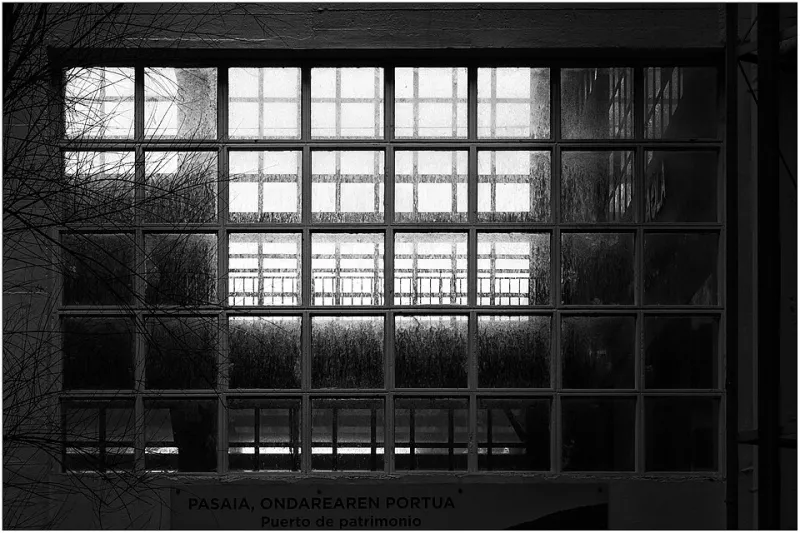
Photo: unukorno from Germany, CC BY 4.0, via Wikimedia Commons
The American home has long been sold as sanctuary—a fortress against the chaos of the wider world. Contemporary horror fiction has spent decades systematically dismantling that promise, exposing the walls we build around ourselves as the very instruments of our undoing. From suburban cul-de-sacs to generational farmhouses, the literature of dread has made the domestic interior its most potent and devastating battlefield.
There is something uniquely American about this particular horror. The mythology of homeownership—the white picket fence, the mortgage, the carefully tended lawn—sits at the very center of the national identity. When horror fiction corrupts that mythology, it does not merely frighten; it performs a kind of cultural autopsy, cutting open the dream to reveal what festers beneath.
From Haunting to Habitation
The haunted house, of course, is not a modern invention. Shirley Jackson's The Haunting of Hill House (1959) established the foundational grammar of domestic dread in American letters, presenting a structure that is not merely occupied by evil but constituted by it—a building whose geometry itself enacts a kind of psychological violence upon its inhabitants. Jackson's genius was in refusing to distinguish cleanly between the house's malevolence and Eleanor Vance's deteriorating interior life. The home and the self became interchangeable, each corrupting the other in a closed circuit of ruin.
What contemporary authors have done is accelerate and politicize that circuit. Where Jackson's Hill House existed in relative social isolation, the haunted spaces of twenty-first-century American horror are embedded in recognizable cultural landscapes: the foreclosed subdivision, the inherited plantation, the gentrified Victorian rowhouse. The terror is no longer abstract. It is historically situated, economically legible, and deeply uncomfortable in ways that transcend the supernatural.
Suburbia as Symptom
Paul Tremblay's work offers one of the more unsettling contemporary examinations of the American domestic ideal under siege. In A Head Full of Ghosts (2015), the family home becomes a theater for competing performances—religious spectacle, reality television, economic desperation—until the question of what is truly haunting the house becomes inseparable from the question of what America does to families under financial and social pressure. The horror here is not a ghost in the traditional sense. It is the slow, grinding machinery of circumstance that transforms a home into a trap.
This is the critical evolution in contemporary American horror fiction: the monster has been internalized. It no longer necessarily arrives from outside. It is discovered, gradually and with mounting horror, to have been present all along—woven into the foundation, encoded in the family's own history, or metabolized from the cultural toxins of American life itself.
Silvia Moreno-Garcia's Mexican Gothic (2020), while set in mid-century Mexico, speaks directly to an American readership fluent in the language of colonial inheritance and the violence embedded in property. The house in that novel—High Place, with its suffocating fogs and its biological horror—functions as a monument to what accumulated power does to those it consumes. The domestic space is revealed as an apparatus of domination, beautiful on its surface and predatory in its depths.
The Architecture of Inheritance
No examination of domestic horror in American fiction can proceed without addressing the question of whose homes are being haunted and by what histories. Tananarive Due, one of the most important voices in contemporary American horror, has long understood that for Black Americans, the haunted house carries a weight of historical specificity that white horror traditions have rarely been equipped to process.
In Due's work, and in the broader tradition of what scholars have begun calling Afrofuturist and Black horror fiction, the domestic space is haunted not by anonymous malevolence but by the precise and documented terrors of American history. The house is not merely frightening—it is implicated. The land beneath it remembers. This is horror as historiography, and it represents perhaps the most significant development in the genre's literary evolution.
Riverdale Morrigan's short fiction—published across several independent journals and collected in small-press anthologies—has similarly explored how Indigenous relationships to land and domestic space resist and complicate the European haunted-house tradition. When the home itself is built on contested or stolen ground, the nature of the haunting changes entirely. The genre's conventions buckle under the weight of that recognition.
Psychological Space as Physical Architecture
The contemporary horror novel has also grown increasingly sophisticated in its treatment of the home as a projection of mental states—a tradition that extends from Poe's collapsing House of Usher through to Carmen Maria Machado's In the Dream House (2019), perhaps the most formally audacious domestic horror text of the past decade.
Machado's memoir-in-fragments uses the structural conventions of horror—the haunted house, the curse, the trap—to map the geography of an abusive relationship. The dream house of the title is simultaneously a real physical location, a psychological prison, and a literary archetype. By placing her own experience within the genre's framework, Machado does something quietly radical: she insists that the horror genre has always been capable of this level of psychological and political precision, even when its practitioners have not reached for it.
The rooms of Machado's dream house are annotated with dread. The reader moves through them as through a building they recognize but cannot quite place—familiar in the way that all confined spaces eventually become familiar to those trapped within them.
What the Walls Know
What unites these varied works—across genre, tradition, and identity—is a shared insistence that the domestic space is never neutral. Every home contains its history, its economics, its politics. The walls absorb what happens within them. The foundation remembers what was displaced to lay it.
Contemporary American horror fiction, at its most ambitious, has made this insistence its central project. It has transformed the house from a setting into a text—one that can be read, interrogated, and ultimately indicted. In doing so, it has produced some of the most formally inventive and culturally necessary literature currently being written in the United States.
The sanctuary, it turns out, was always a story we told ourselves. The best horror fiction has the courage—and the craft—to tell us a different one.