Ink in the Margins: The Renegade Literary Journals Refusing to Wait for Permission
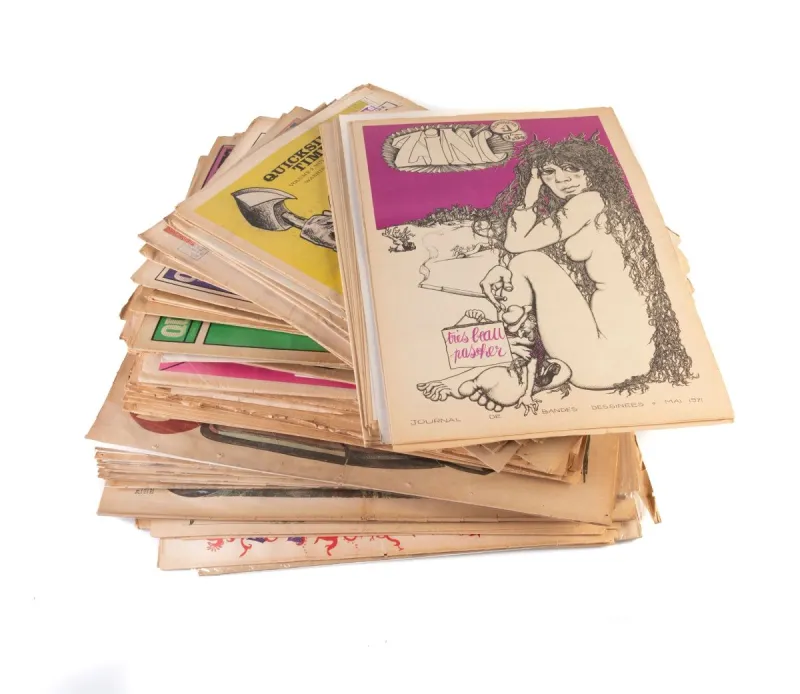
Photo: literary zines independent magazines stacked books underground press, via img1.wsimg.com
Somewhere in a rented studio in Baltimore, a poet is hand-stapling the forty-seventh issue of a journal that no algorithm will ever recommend and no chain bookstore will ever stock. She is not discouraged. She is, in fact, precisely where she intends to be. The underground literary press in America has never been a fallback position—it has always been a vocation, a resistance, and a form of faith.
In an era dominated by consolidation—five major publishing conglomerates controlling an overwhelming proportion of what Americans read—the ecosystem of independent literary magazines, small presses, and self-produced zines represents something more than a niche market. It represents the conditions under which genuine literary innovation actually occurs. And it is, by most available measures, thriving in ways that the mainstream publishing industry is structurally incapable of replicating.
The Architecture of Independence
The independent literary journal has a history in America that predates the current crisis of consolidation by well over a century. The Little Review, which published early James Joyce and Ezra Pound in the 1910s and 1920s, was censored, seized by postal authorities, and prosecuted for obscenity—and it remains one of the most consequential literary publications in American history. The Evergreen Review in the 1950s and 1960s gave a platform to the Beats and the Black Mountain poets before any mainstream publisher would touch them. Semiotext(e), emerging from Columbia in the late 1970s, introduced American readers to French theory and experimental fiction that the academy itself had not yet metabolized.
This is the tradition that contemporary underground journals inherit: not marginality as accident, but marginality as method. The position outside institutional structures is not a deficiency—it is, historically, the condition of possibility for the most significant literary work.
What the Gatekeepers Won't Touch
The question worth asking is what, precisely, the current generation of independent journals is publishing that mainstream outlets will not. The answer is neither simple nor singular, but several patterns emerge with notable clarity.
First, there is formal experimentation of a kind that commercial publishers have grown increasingly reluctant to underwrite. When Conjunctions—one of the longer-running prestige independent journals, based at Bard College—publishes a novella-length work of fragmented, non-linear prose that resists conventional narrative closure, it does so knowing that the text would face near-certain rejection from any editor operating under quarterly earnings pressure. The same is true of the shorter-run journals: Fence, Hobart, The Offing, and dozens of others regularly publish work that is formally ambitious in ways that commercial publishing has largely ceased to reward.
Second, and perhaps more urgently, independent journals have become essential platforms for voices that mainstream publishing has historically underserved. Apogee Journal, founded in 2012 and dedicated to work by writers of color, has consistently published writers who went on to significant recognition—recognition that might have come considerably later, or not at all, without that initial platform. Foglifter, focused on LGBTQ+ literature, and Kweli Journal, centering Black literary voices, perform similar functions: they create the conditions of visibility before visibility is granted by larger institutions.
Third, there is the matter of the zine—the most radically democratic form in the independent literary ecosystem. The contemporary literary zine, often produced in editions of fifty to three hundred copies, photocopied or risograph-printed, distributed through record stores, independent bookshops, and mailed directly to subscribers, represents a form of publication so outside the logic of the market that it functions almost as a critique of that logic by its mere existence.
Editors as Visionaries
The editorial sensibility that drives these publications deserves particular attention, because it is substantively different from the editorial sensibility that drives commercial publishing. Carmen Giménez, whose work with Noemi Press has helped define the aesthetics of contemporary Latinx experimental poetry, has spoken in interviews about the fundamental question she brings to every submission: not will this sell, but what does this do that nothing else does. That distinction, modest as it may sound, represents a genuinely different theory of literary value.
Similarly, the editors behind Witch Craft Magazine—a newer journal focused on work at the intersection of the speculative, the feminist, and the formally strange—have articulated an editorial philosophy rooted in the conviction that the most important literary work is often the work that makes readers uncomfortable in productive ways. This is not a philosophy that translates easily into pitch meetings with commercial publishers.
What these editors share, across their considerable differences in focus and aesthetic, is a willingness to operate under conditions of genuine uncertainty—financial, institutional, and cultural—in service of a vision of literature that exceeds what the market currently rewards.
The Economics of Refusal
It would be dishonest to discuss the independent literary press without addressing its economic precarity. Most independent journals pay contributors little or nothing. Most editors work second and third jobs. Most small presses operate at a structural loss that is sustained by grants, donations, and the sheer stubbornness of the people who run them.
This precarity is not romantic. It is a genuine constraint that limits who can afford to participate in independent publishing—both as editors and as writers—and it represents a systemic inequity that the progressive literary community has begun to address with increasing seriousness. Organizations like the Community of Literary Magazines and Presses (CLMP) have worked to expand grant funding and institutional support. Crowdfunding platforms have allowed journals to build direct relationships with their readership that bypass traditional distribution entirely.
But the deeper question—of whether a literary culture this important should depend so heavily on voluntarism and scarcity—remains unresolved and pressing.
Why This Matters
The underground literary journal is not a museum of the avant-garde. It is the laboratory in which American literature's future is currently being assembled, imperfectly and urgently, by people who have decided not to wait for permission.
What emerges from these pages—stapled, photocopied, perfect-bound in editions of five hundred—has always, eventually, changed the larger literary conversation. The writers that the independent press discovers and sustains today will be the writers that shape American literature in the decades ahead. The forms being invented in these journals will eventually, in some transmuted version, reach readers who have never heard of the journals themselves.
That is the particular genius of the margins: they do not need to be recognized to do their work. They only need to continue.