Stolen Light: The Shadow Networks Keeping Endangered Literary Works Alive
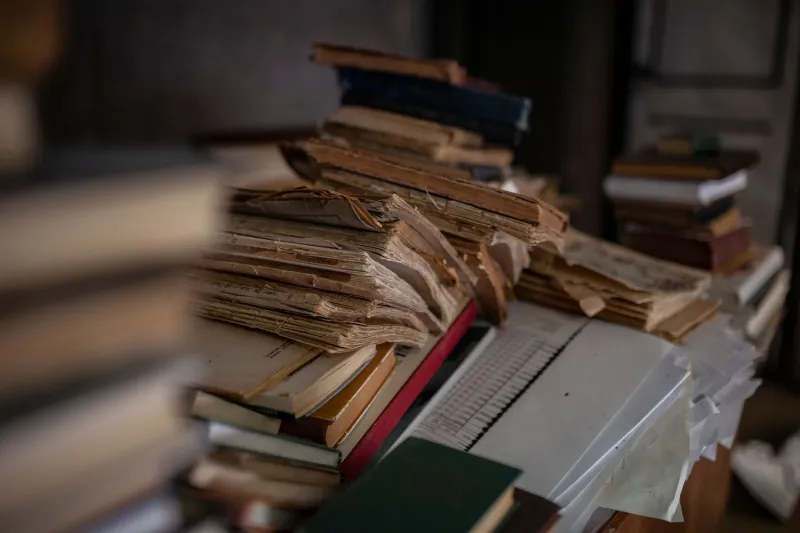
In basements, private servers, and the back rooms of independent bookshops, a parallel economy of literary preservation has been operating for decades — one that the publishing industry regards as piracy and that its participants regard as a moral imperative. The tension between intellectual property law and the survival of endangered literature has never been more acute, nor more urgently worth examining.
The Disappeared Books
Every year, thousands of literary works effectively cease to exist. Not because they have been burned or formally banned — though some have — but because the economic logic of American publishing has determined that their continued availability is not profitable. Out-of-print editions vanish from circulation. Small-press literary journals, their print runs exhausted and their digital archives unfunded, dissolve into inaccessibility. Rare chapbooks, hand-printed broadsides, and limited-edition poetry collections survive in a handful of institutional libraries and private collections, unavailable to the readers who might most need them.
The publishing industry frames this disappearance as a natural consequence of market forces. What it actually represents is a form of cultural attrition — the slow erasure of the literary record along lines determined not by aesthetic value but by commercial viability. The books that survive are the books that sell. The books that do not sell disappear, and with them the ideas, the voices, and the formal experiments they contained.
Into this gap, a community of readers, collectors, and activists has moved.
The Architecture of the Underground
The networks that circulate endangered literary works in the United States operate across several overlapping registers, each with its own logic, its own risks, and its own relationship to legality.
At the most visible end of the spectrum are the Little Free Library networks and informal book exchange communities that have proliferated in American cities and towns over the past decade. These ostensibly innocent structures — the small wooden boxes mounted on posts in front yards, stocked with donated books for passersby — have become, in some communities, deliberate distribution points for works that are difficult or impossible to obtain through conventional channels. Rare editions, photocopied chapbooks, and hand-bound reproductions of out-of-print texts circulate through these networks with a casualness that belies the care with which they have been assembled.
Deeper in the underground, private digital networks have constructed what their participants describe as shadow libraries: vast, carefully organized archives of scanned and digitized literary works, accessible by invitation only and maintained by volunteers who understand themselves to be performing an act of cultural preservation. These archives frequently contain material that exists nowhere else in digital form — the complete runs of defunct literary journals, the collected works of poets whose publishers folded decades ago, the unpublished manuscripts that estates have declined to release commercially.
The Moral Argument
The participants in these networks are not, for the most part, motivated by a desire to deprive authors of income. Many of them are writers themselves. Their argument is more specific and, in its own terms, more defensible: that the intellectual property framework governing literary works in the United States systematically prioritizes the interests of rights holders — frequently corporate entities rather than the authors themselves — over the interests of readers and the broader cultural commons.
When a small press folds and its backlist falls out of print, the works it published do not revert to a public domain that would make their reproduction legal. Under current American copyright law, those works remain under copyright — often for decades beyond the author's death — even as they become functionally unavailable. The copyright holder, who may be an estate, a corporate successor, or an entity with no particular interest in the literary value of the work, retains the legal right to prevent reproduction while making no effort to ensure access.
In this context, the shadow archivist who scans and distributes an out-of-print collection of poetry is not, in any morally serious sense, stealing. They are rescuing. The distinction matters, even if the law declines to recognize it.
Rare Book Networks and the Collector's Underground
Parallel to the digital shadow libraries, a physical network of rare book collectors, antiquarian dealers, and literary activists maintains its own economy of endangered texts. This network operates through private sales, book fairs, estate auctions, and the kind of quiet word-of-mouth that has always characterized the circulation of materials that powerful institutions would prefer to see disappear.
The works that move through this network include not only the commercially out-of-print but the actively suppressed: books that have been challenged or removed from library collections under pressure from community groups or local governments, works that publishers have declined to reissue because their content remains controversial, and texts whose authors have been subject to the kind of reputational destruction that removes them from the literary conversation without any formal act of censorship.
The collectors who traffic in these materials occupy a peculiar ethical position. They are, in many cases, the last custodians of works that would otherwise be entirely lost to general readers. They are also, in some cases, profiting from scarcity that the suppression of those works has created. The tension between preservation and exploitation is not always resolved cleanly within the community, and its members are not uniformly comfortable with every dimension of what they do.
What Is Being Preserved and Why It Matters
The literary works that circulate through these shadow networks are not, as a rule, the works that the mainstream literary establishment has chosen to celebrate. They are the works that fell through the cracks — the experimental, the marginal, the formally radical, the politically inconvenient. They are the first books of writers who went on to significance and whose early work has been allowed to disappear. They are the complete runs of journals that published the writers who mattered before anyone knew they mattered.
To lose these works is to lose not only the texts themselves but the record of how American literature actually developed — the arguments it had with itself, the formal experiments it conducted and abandoned, the voices it amplified before the market decided they were not commercially viable.
The Press in the Dark
At The Dark House Press, we recognize in these shadow networks something that resembles our own founding impulse: the conviction that literature which matters must be kept alive even when — especially when — the systems designed to distribute it have failed. The ink thieves, as the publishing industry sometimes calls them, are in many cases the most committed readers in the country. They understand, with a clarity that the market does not reward, that a book no one can read is a book that has already died.
The question of whether their methods are legal is less interesting than the question of whether their methods are necessary. In far too many cases, the answer to the second question is plainly yes.