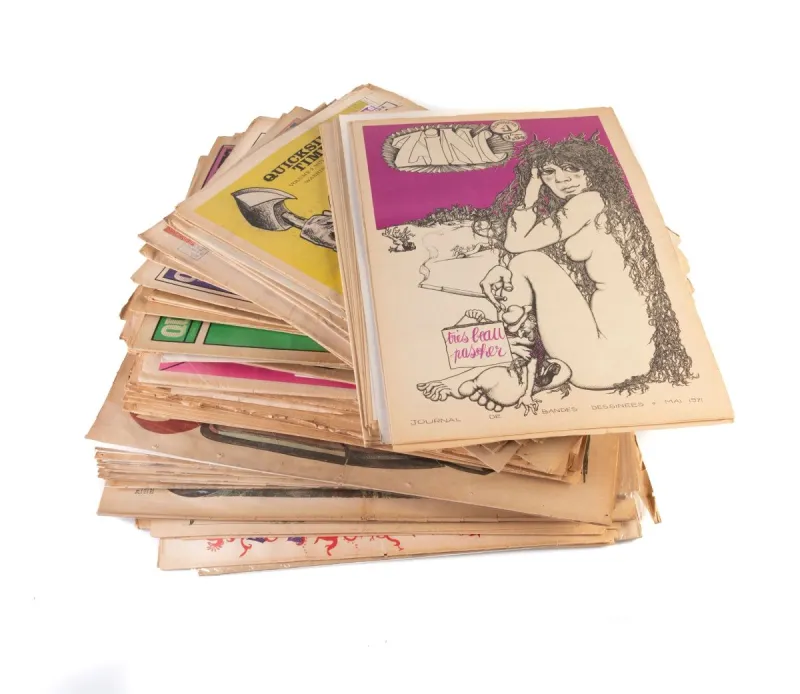
The Sealed Room: America's Lost Manuscripts and the Architecture of Literary Silence
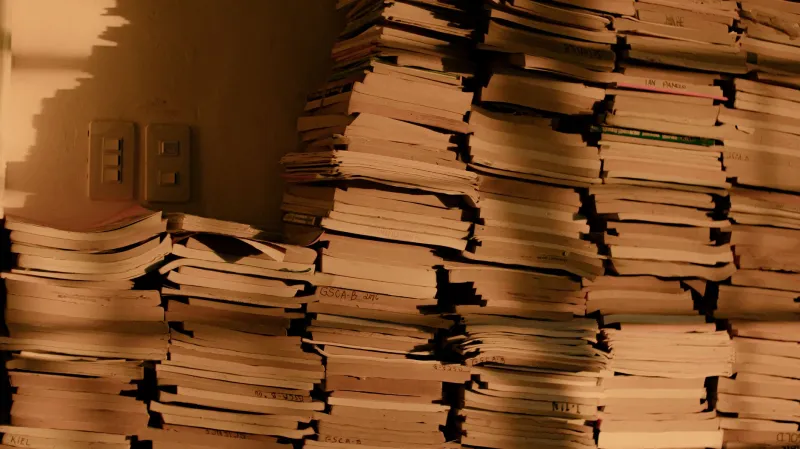
Somewhere in a climate-controlled archive at a midwestern university, a novel that might have altered the course of American letters sits boxed and catalogued beneath a donor restriction that expires in 2047. It is not alone. Across this country, thousands of completed manuscripts occupy a peculiar purgatory — finished, yet unread; authored, yet voiceless — and the mechanisms that placed them there deserve far more scrutiny than they have received.
The popular imagination tends to romanticize the unfinished manuscript: Kafka's instructions to Max Brod, the scattered pages of an eccentric genius, the drawer that opens only after death. But this romance obscures a far more systemic and considerably less poetic reality. The majority of unpublished American manuscripts did not arrive at their silence through tragedy or artistic incompletion. They arrived there through rejection, through institutional indifference, through the grinding arithmetic of a publishing industry that has, for decades, narrowed its appetite while widening its profits.
The Archive as Mausoleum
University special collections across the United States hold an extraordinary volume of literary material that the public has never encountered. The Harry Ransom Center at the University of Texas at Austin, the Beinecke Rare Book and Manuscript Library at Yale, the Berg Collection at the New York Public Library — these institutions preserve correspondence, drafts, and completed works by writers both celebrated and obscure. What they also preserve, with rather less fanfare, are the final drafts of novels that publishers declined, poetry collections that found no home, and experimental works that editors deemed commercially untenable.
The language used to describe these holdings is frequently antiseptic. Finding aids speak of "unpublished typescripts" and "holograph manuscripts" with a neutrality that strips the material of its human weight. Behind each such notation is a writer who completed something — who saw it through from first sentence to last — and then encountered a door that would not open.
Donor restrictions compound the problem considerably. Writers and their estates frequently place embargoes on sensitive materials, sometimes for understandable reasons of privacy, sometimes for reasons that seem, in retrospect, to serve no one. The result is a literary record with deliberate gaps — absences that future scholars will inherit without fully understanding what was removed from view, or why.
The Gatekeeping Apparatus
To understand why so many manuscripts remain sealed from public life, one must reckon honestly with the structure of American publishing. The consolidation of major houses under a handful of corporate conglomerates has produced an industry that is simultaneously more visible and more risk-averse than at any prior moment in its history. The "Big Five" — now effectively the Big Four following the collapse of the proposed Penguin Random House and Simon & Schuster merger under antitrust scrutiny — command the distribution channels, the review attention, and the bookstore shelf space that determine which books find readers.
Literary agents, who function as the primary gatekeepers between writers and publishers, receive submission volumes that defy comprehension. Estimates suggest that a mid-career agent receives upward of ten thousand queries per year and offers representation to fewer than a dozen writers in that same period. The mathematics alone condemn an enormous proportion of completed work to invisibility before a single editorial eye has assessed its merit.
What is lost in this filtration is not merely mediocrity — though mediocrity is certainly among the casualties. What is lost includes work that is formally unconventional, thematically challenging, politically uncomfortable, or simply written by authors whose identities do not map onto the publishing industry's calculus of marketability. The history of American literature is, in no small part, a history of what the market decided readers did not need.
Notable Silences
The suppressed or long-delayed manuscript has precedent in cases that eventually found resolution, however belated. Henry Roth completed a second novel decades after Call It Sleep and watched it sit unread for years before a portion appeared as Mercy of a Rude Stream. Ralph Ellison labored on a second novel for forty years; what emerged posthumously as Juneteenth and later the fuller Three Days Before the Shooting... represented only a fragment of what he had intended. These are the famous cases — the ones that achieved eventual publication and thus entered the record.
The cases that did not achieve publication are, by definition, harder to document. Scholars of African American literature have long argued that the suppression of Black writers' manuscripts during the mid-twentieth century represented not merely market failure but active cultural erasure — a deliberate narrowing of whose interiority was deemed worthy of the novel form. Similar arguments apply to the manuscripts of queer writers prior to the 1970s, to Latinx authors navigating a publishing world that treated their work as niche rather than universal, and to working-class voices whose subject matter editors routinely characterized as insufficiently "literary."
The wound, in other words, is not random. It follows the contours of American power.
Digital Publishing and the Illusion of Democratization
The advent of digital self-publishing platforms — Amazon's Kindle Direct Publishing chief among them — has been heralded, with some justification, as a rupture in the old gatekeeping order. A writer may now move from completed manuscript to available text within days, without the intervention of agent, editor, or publishing house. The barrier to publication has been effectively dissolved.
And yet the barrier to readership has not. Discoverability on platforms that host millions of titles requires either marketing resources that most independent authors do not possess or the kind of algorithmic favor that tends to reward existing commercial categories rather than genuinely experimental work. A formally adventurous novel — one that might, in another era, have found its audience through the advocacy of an independent press with a committed editorial vision — does not necessarily fare better in a marketplace where visibility is purchased rather than earned through critical attention.
What digital self-publishing has changed is the nature of the silence. The manuscript that once gathered dust in a private archive can now occupy a product page that receives zero visitors. The silence is the same; only its address has changed.
Independent literary presses — small operations sustained by grants, subscriptions, and an almost theological commitment to the work — remain the most reliable mechanism for introducing genuinely challenging manuscripts to readers who are prepared to meet them. But these presses operate under severe financial constraint, and the manuscripts they cannot reach remain, in every meaningful sense, unpublished.
What the Sealed Room Contains
The question of what America's lost manuscripts actually represent — whether they constitute a hidden canon of suppressed brilliance or simply the necessary residue of a competitive form — is one that cannot be answered without access to the material itself. That is, of course, precisely the problem.
What can be said with confidence is that the architecture of literary silence in this country is neither accidental nor neutral. It has been constructed, maintained, and in certain instances deliberately reinforced by institutions whose interests do not always align with those of literature itself. The sealed room exists because someone built the wall.
Until those walls are examined with the same critical rigor we apply to the texts that escaped them, the American literary record will remain incomplete — a map drawn only of the territory that power permitted us to see.