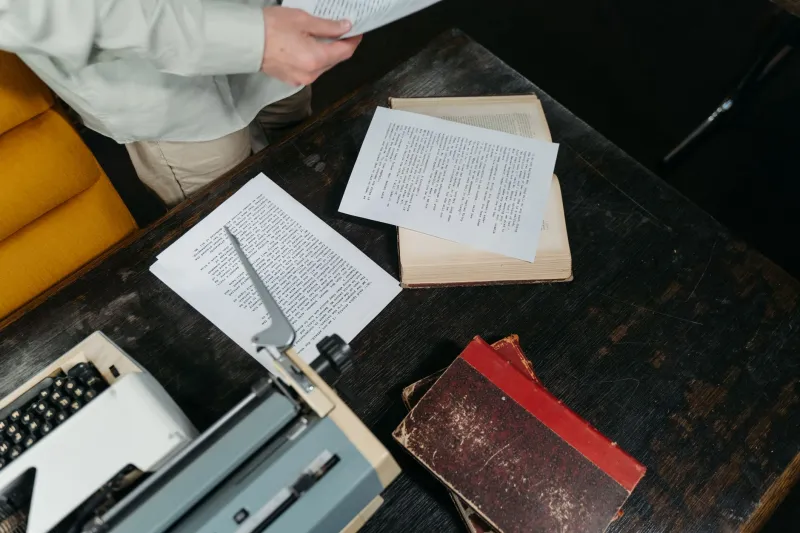
Punctuation as Dread: The Grammar of Terror in American Fiction's New Avant-Garde
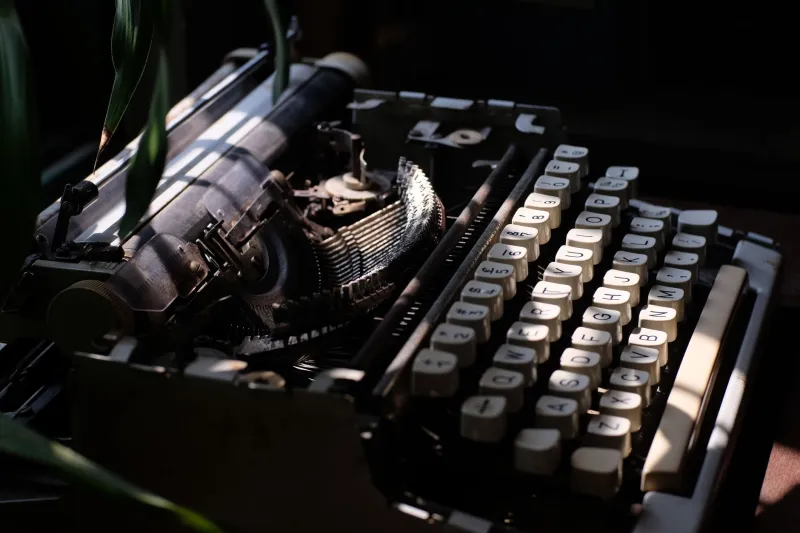
There is a particular species of unease that arrives not from what a sentence says, but from the way it refuses to behave. A period dropped too soon. A clause that extends past the point of comprehension, folding back upon itself, consuming its own subject, swallowing the verb whole before the reader has located solid ground. In the most disquieting corners of contemporary American fiction, punctuation has ceased to be a navigational aid and become something closer to a weapon—or, more precisely, a wound.
This is not mere stylistic affectation. The writers working at fiction's darkest periphery have understood something that traditional horror long missed: that the machinery of language, when deliberately fractured, produces a form of terror no amount of explicit violence can replicate. The breakdown of readable syntax does not merely describe psychological collapse—it performs it upon the reader in real time.
The Sentence as Architecture, the Fragment as Ruin
Consider what a complete sentence promises. Subject, verb, object: an agent acts upon a world that exists to receive that action. This is, at its core, a statement of ontological confidence. The world is legible. Causality holds. Things happen to other things in comprehensible sequence.
When contemporary writers like Paul Tremblay, Carmen Maria Machado, and the late Denis Johnson deploy fragmentation—not as stylistic flourish but as structural principle—they are dismantling precisely that promise. Machado's In the Dream House is instructive here: the second-person address combined with the fractured chronology of its chapters creates a disorientation that no first-person confession could achieve. The reader is placed inside a consciousness that cannot trust its own sequencing, because the sentences themselves refuse to sequence properly. The reader does not observe the protagonist's confusion; the reader inhabits it.
Fragments, in this context, are not incomplete sentences. They are sentences that have already been completed and then broken. The difference matters enormously. A fragment reads as aftermath—as the textual evidence of something that happened before the words arrived.
The Em Dash as Abyss
Among the punctuation marks most ruthlessly weaponized by American literary horror, the em dash deserves particular attention. In conventional prose, the em dash signals a digression, an elaboration, an aside. It is parenthetical confidence: I am stepping away from my main point, and I will return.
In the fiction of writers like Brian Evenson—whose work occupies a space somewhere between Beckett's philosophical despair and Ligotti's cosmic pessimism—the em dash becomes a site of genuine rupture. A sentence begins, proceeds with apparent purpose, and then—
The interruption is not followed by elaboration. It is followed by something else entirely, or by nothing, or by a continuation that bears no grammatical relationship to what preceded it. The reader's syntactic expectations are not merely frustrated; they are made to feel naive. The em dash, in these deployments, does not signal digression. It signals the point at which the sentence encountered something it could not survive.
Evenson's fiction is populated by characters who cannot complete their own thoughts, not because they lack intelligence but because the thoughts they are attempting to think are structurally incompletable. The punctuation makes this visible. The horror is not in the content of the interrupted sentence. The horror is the interruption itself.
Run-On as Psychic Overflow
If the fragment represents consciousness under erasure, the run-on sentence represents consciousness under siege—the mind that cannot stop, that has lost the capacity to locate its own conclusion, that generates language the way a wound generates blood: involuntarily, in excess, without therapeutic purpose.
This technique reaches its American apotheosis in certain passages of William Gay's Twilight, where sentences accumulate subordinate clauses the way Southern Gothic landscapes accumulate Spanish moss: organically, inevitably, until the original structure is entirely obscured. The effect is suffocating in the most precise sense. The reader cannot breathe because the prose cannot breathe. There are no spaces in which to recover.
More recently, writers operating in the tradition of what might be called American weird fiction—a lineage running from Ambrose Bierce through Shirley Jackson to Kelly Link—have deployed the run-on as a means of collapsing the distance between interiority and exterior event. When a character's internal monologue and the objective narration of events become syntactically indistinguishable, the reader loses the ability to determine what is happening and what is merely feared. The run-on enacts this confusion at the level of grammar itself.
Whitespace and the Horror of the Unsaid
Perhaps the most underexamined punctuation of all is the absence of punctuation: the white space that contemporary American writers increasingly deploy as a form of negative grammar. Section breaks that arrive mid-revelation. Paragraphs that end before completing their argument. The blank page that follows a climactic scene and insists, through its blankness, that no description could be adequate.
This is the punctuation of refusal, and it is, in its way, the most frightening of all the techniques available to the contemporary writer. Because what whitespace tells the reader is not that the sentence has ended, or been interrupted, or overwhelmed. What whitespace tells the reader is that language itself has looked at what it was about to describe and declined.
The darkness that American fiction is learning to inhabit is not the darkness of explicit horror. It is the darkness that grammar creates when it fails—deliberately, strategically, with full artistic intention—to illuminate.
Why This Matters Now
The timing of this syntactic experimentation is not coincidental. American writers working in the post-2016 cultural moment have inherited a landscape in which the relationship between language and reality has become genuinely unstable—in which words demonstrably fail to correspond to the things they name, in which syntax can be weaponized to obscure rather than reveal, in which the apparent clarity of a sentence can be the most dangerous thing about it.
In this context, the deliberate fracturing of readable prose is not obscurantism. It is honesty. It is the refusal to write sentences that feel more stable than the world they purport to describe.
The writers working at fiction's darkest margins have understood that the most truthful thing a sentence can do, in this particular historical moment, is break. And that what falls through the break—that negative space, that syntactic wound—is where the real horror lives.