Manuscripts in Mourning: The Incomplete Final Works That Continue to Haunt American Literature
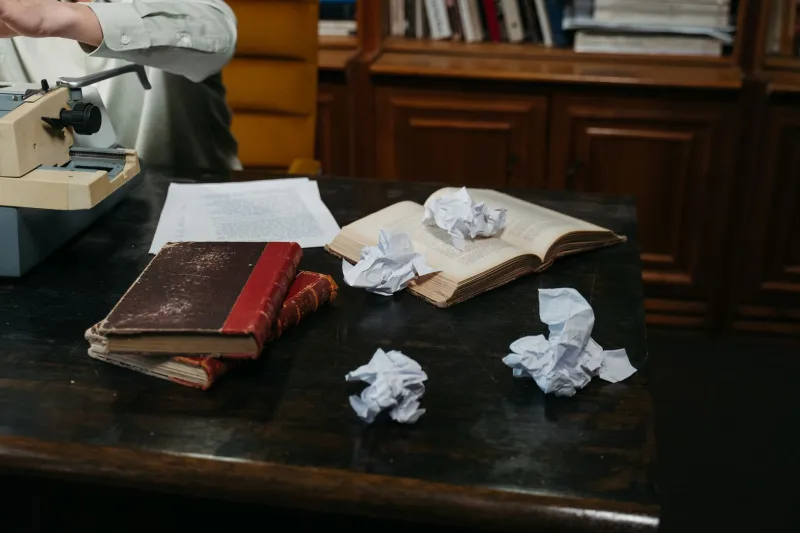
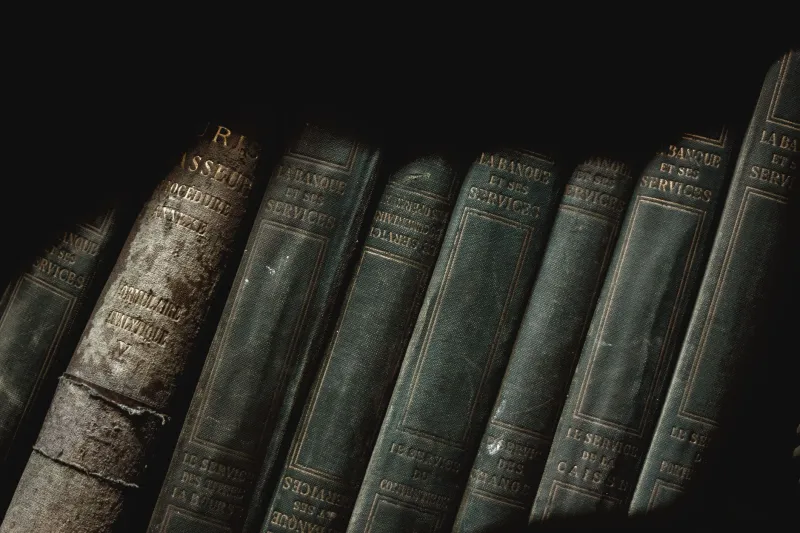
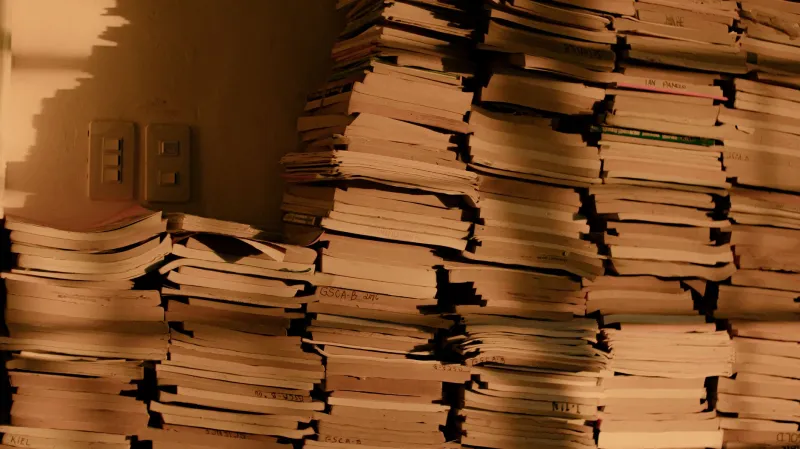
There is a particular species of literary haunting that no ghost story has ever adequately captured. It does not reside in cursed houses or restless apparitions. It lives, instead, in manila envelopes, in archival boxes sealed with bureaucratic tape, in the temperature-controlled vaults of university libraries where the last, unfinished sentences of brilliant minds wait in a suspension that is neither death nor life. When an American writer of consequence dies before completing a manuscript, something ruptures in the literary order—a wound that editors, heirs, and devoted readers spend decades attempting, often unsuccessfully, to close.
The incomplete manuscript is not merely an artifact of tragedy. It is a philosophical problem wearing the costume of a book.
The Peculiar Anguish of the Unresolved Page
To understand why fragmentary works exert such extraordinary power over the literary imagination, one must first reckon with what a finished book actually promises. A completed novel or collection of poems represents an act of authorial will—a declaration that this is what I intended, here is where the meaning resolves. The unfinished work withdraws that promise entirely. It hands the reader a map with the final destination torn away.
Ralph Ellison spent more than four decades working on his second novel following the monumental success of Invisible Man in 1952. When he died in 1994, he left behind thousands of manuscript pages, notes, and competing drafts that his literary executor John Callahan spent years attempting to assemble. The resulting publication, Juneteenth in 1999, and its expanded successor Three Days Before the Shooting... in 2010, offered readers two different editorial visions of the same fragmentary material. Neither could claim with confidence to represent what Ellison himself would have sanctioned. The work haunts precisely because it exists in multiple states simultaneously—a quantum literary object that collapses differently depending on which editorial hand does the observing.
David Foster Wallace presents an equally devastating case. When Wallace died in 2008, he left behind a manuscript he had been laboring over for a decade, a work his widow Karen Green and editor Michael Pietsch ultimately published in 2011 as The Pale King. The novel—or what exists of it—concerns itself with boredom, attention, and the heroism of endurance, themes that acquired a shattering biographical resonance in light of Wallace's death. Pietsch assembled the surviving chapters from Wallace's hard drive and physical papers, making editorial decisions that no living author could have delegated to another without profound reservation. The published text is marked explicitly as unfinished, yet it sits on bookstore shelves beside complete novels, wearing the same rectangular shape, the same confident spine.
The Estate as Gatekeeper, the Editor as Archaeologist
The question of who holds authority over a dead writer's fragmentary work is one that American literary culture has never resolved to anyone's satisfaction. The legal answer—the estate—rarely satisfies the artistic one. Estates operate with motivations that are legitimately complex: financial obligation, familial loyalty, the desire to protect a reputation, and sometimes a genuine if contested understanding of the writer's wishes.
F. Scott Fitzgerald died in 1940 with roughly three-quarters of The Last Tycoon completed. His editor Edmund Wilson assembled the existing chapters alongside Fitzgerald's notes and published them in 1941. The novel's protagonist, Monroe Stahr, remains frozen at the precise moment the manuscript breaks off—suspended in narrative amber, his story neither concluded nor abandoned. For decades, scholars have debated whether Wilson's editorial choices honored or distorted Fitzgerald's intentions. The debate cannot be settled. Fitzgerald left no final instructions, only pages.
This editorial archaeology—the painstaking reconstruction of authorial intent from drafts, correspondence, and marginalia—demands a discipline that sits uncomfortably between scholarship and creative invention. The editor of an unfinished work inevitably becomes, to some degree, a collaborator. This is the secret that publishing houses and estates rarely articulate plainly, because to do so would be to admit that the book readers purchase is partly a fiction about its own authorship.
What Incompleteness Reveals
There is a counter-argument to the prevailing anxiety surrounding fragmentary works—one that deserves serious consideration rather than dismissal. The unfinished manuscript may, in certain instances, communicate something that completion would have obscured. Katherine Anne Porter spent two decades writing Ship of Fools, and the novel she finally delivered in 1962 was received with admiration but also a sense that its length and deliberateness had somehow calcified what might have been more vital in an earlier form. One wonders, occasionally, whether some works are better served by their interruption.
The American literary tradition has, moreover, a complicated relationship with the fragment as a form. The Romantic notion of the sublime ruin—the broken column, the unfinished cathedral—carries genuine aesthetic currency. Readers who encounter The Last Tycoon or The Pale King often report an experience that is, paradoxically, more intimate than what a completed work might have offered. The seams are visible. The writer's struggle is exposed. There is something almost unbearably human about a sentence that simply stops.
The Ethics of Publication
The most serious ethical question surrounding posthumous fragmentary publication is one that the industry has largely preferred to elide: does the act of publishing an unfinished work constitute a form of violation? Writers who leave manuscripts incomplete have, by definition, not authorized their release. The decision to publish is made by others, for reasons that include—whatever the accompanying rhetoric of artistic stewardship—commercial calculation.
This is not a cynical observation so much as an honest one. Publishers are businesses. Literary estates require income. The posthumous release of an incomplete work by a celebrated author generates significant revenue and critical attention. None of this is inherently sinister, but it ought to be named. When we read The Pale King or Juneteenth, we are reading books that their authors did not choose to give us. We are, in a sense, reading stolen goods—and the theft was committed with the most tender of intentions.
What the literary world has not yet developed is an adequate ethical framework for these decisions. Should incomplete manuscripts be archived and made available to scholars without being packaged and sold as commercial novels? Should estates be required to disclose more precisely the degree of editorial intervention involved in assembling a fragmentary text? Should readers be granted a clearer understanding of what they are actually holding?
The Ghost at the Desk
Every unfinished American manuscript is, at its core, a record of interrupted consciousness—a mind in the act of reaching toward something it never arrived at. The pages that remain are not failures. They are evidence of the most serious kind of ambition: the ambition to say something that required more time than a human life could provide.
The dark house of American literature is full of these presences. They do not rattle chains or appear in mirrors. They appear in footnotes, in editorial prefaces written in the careful passive voice of institutional caution, in the particular silence that falls when a reader reaches the final page of a book and realizes the story has not ended—it has merely stopped.
To read these works is to accept an invitation into that silence. It is uncomfortable. It is necessary. And it is, in its strange and irreducible way, among the most honest experiences that literature can offer.