The Locked Door: Is Willful Obscurity in American Literature an Act of Resistance or an Act of Abandonment?
There is a particular kind of silence that greets a book no one can read. Not the silence of neglect, nor the silence of censorship, but the silence of incomprehension—a quiet so complete it resembles consent. The reader closes the volume, places it on a shelf beside other volumes similarly closed, and moves on. The author, presumably, intended something by this. The question worth asking, with some urgency, is what.
Contemporary American literature contains a significant and growing body of work that does not merely resist easy consumption but appears, at times, to resist consumption altogether. Works that fracture grammar into archaeology, that dissolve narrative into pure texture, that treat language itself as an adversary rather than a medium. These are not accidental difficulties. They are constructed ones. And the literary culture surrounding them has developed an elaborate theology to explain why such construction is not only valid but necessary.
This theology deserves scrutiny.
The Architecture of Resistance
The intellectual lineage of difficulty in American letters is not without honor. One traces it from Gertrude Stein's syntactic loops through the Black Mountain poets, through Language Poetry's systematic dismantling of referentiality, through the post-Oulipo experimentalists who treat constraint as liberation. In each instance, the argument is essentially the same: conventional language carries within it the sediment of conventional thought, and to write in ways that feel natural is to reproduce the ideological conditions that make injustice feel natural as well.
This is a serious argument. It deserves to be taken seriously rather than dismissed as academic posturing. When a poet like Susan Howe fractures the historical record into shards of white space and broken citation, she is not being difficult for its own sake—she is insisting that the violence done to certain voices in American history cannot be rendered in the smooth, authoritative prose that originally silenced them. The form is the argument. The difficulty is the meaning.
And yet.
The Reader Who Was Never Invited
There is a reader this argument consistently forgets—or, more precisely, consistently assumes. The reader who might have the most to gain from literature that challenges the ideological sediment of conventional language is rarely the reader who encounters it. The Language Poetry collections sit in university libraries. The experimental novels from Dalkey Archive or Dorothy, A Publishing Project find their audiences primarily among graduate students, professors, and a relatively small cohort of literary devotees who have already been inducted into the interpretive frameworks required to engage with them.
This is not a trivial observation. It is, in fact, a profound irony. If the political project of avant-garde American literature is to destabilize the structures of power encoded in conventional discourse, then a literature that can only be decoded by those who have passed through elite educational institutions has not destabilized anything. It has merely relocated the gatekeeping from the content of the text to the conditions of its reception.
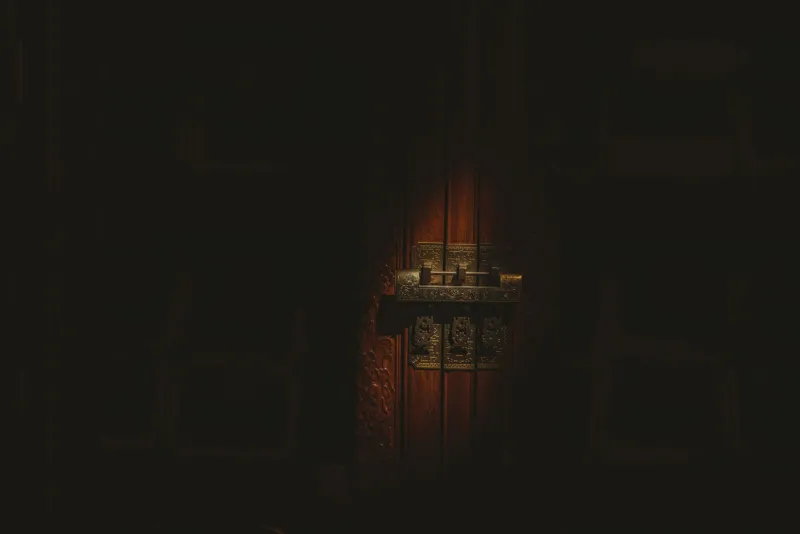
The locked door does not discriminate between the powerful and the powerless. It simply locks.
Difficulty as Distinction
One must also reckon honestly with the degree to which literary difficulty functions as a form of cultural capital. Pierre Bourdieu would have recognized the dynamic immediately: the ability to read and appreciate an extremely difficult text confers status within a specific social field. The text becomes a credential. The author becomes a figure of rarefied seriousness. The press that publishes such work signals its own elevation above commercial concerns.
None of this is necessarily corrupt. Serious literary culture requires the existence of work that does not orient itself toward the market. The problem arises when difficulty ceases to be a formal strategy and becomes an aesthetic pose—when the obscurity is not doing the work of meaning but is instead performing the idea of meaning, gesturing toward profundity without actually producing it.
American literary culture is not always honest with itself about how often this substitution occurs. The veneration of difficulty can make it difficult to ask whether a given difficult text is actually accomplishing anything, or whether its impenetrability is being mistaken for depth.
What Darkness Owes Its Reader
This press has always understood literature as something that operates in shadow—not in spite of its readers, but in service of them. The darkness we prize is not the darkness of exclusion. It is the darkness that a reader enters and, having entered, cannot leave unchanged. There is a crucial distinction between writing that demands effort and writing that demands surrender.
The finest experimental American literature holds both conditions simultaneously. It makes demands. It withholds easy satisfaction. It refuses the consolations of transparent narrative. But it also—and this is the essential thing—it also reaches. Anne Carson reaches. Claudia Rankine reaches. Even the late work of William Gaddis, for all its formidable resistance, extends something toward the reader: a hand in the dark, however obscured.
The works that do not reach—that treat their own difficulty as sufficient justification, that mistake the reader's confusion for the reader's enlightenment—these works have not achieved radical autonomy. They have achieved irrelevance, which is a different thing entirely, and a far less interesting one.
The Question of Who Gets to Decide
Perhaps the most uncomfortable dimension of this conversation concerns who, precisely, is empowered to declare a work's difficulty meaningful versus merely indulgent. The critical apparatus that evaluates experimental American literature is not a neutral body. It has its own hierarchies, its own prejudices, its own blind spots. Works by writers from outside the traditional centers of literary power—writers of color, working-class writers, writers outside the New York–Boston–Iowa City axis—have historically been subjected to accusations of obscurity or inaccessibility when their formal strategies were simply unfamiliar to the critics evaluating them.
This history demands humility from anyone who would critique experimental difficulty. The line between gatekeeping and genuine aesthetic judgment is not always clear, and the confidence with which that line is drawn has often said more about the critic than the work.
A Literature That Earns Its Darkness
What this press argues for—what it has always argued for, in its own way—is a literature that earns its darkness. That constructs its difficulty with intention and with conscience. That asks not only whether the form serves the meaning, but whether the meaning can, in some essential way, reach beyond the room in which it was written.
This is not a call for simplicity. It is a call for honesty. The avant-garde tradition in American letters has produced some of the most vital, necessary, and genuinely subversive work this culture has generated. It has also produced a great deal of work that mistakes its own impenetrability for power.
The locked door, after all, keeps nothing alive. It only keeps things contained.
Literature that wishes to matter—that wishes to disturb, to illuminate, to do any of the things experimental writers claim to want it to do—must eventually contend with the fact that it requires a reader. Not a credentialed reader. Not a reader who has earned admission. Simply a reader, standing at the threshold, willing to enter.
The question is whether the work is willing to let them.